

The Great Toilet Debate: Standard vs. Comfort Height
Have you ever sat down on a toilet and instantly thought, “Why does this feel so high?”
Or maybe you’ve used one somewhere else and wondered why yours suddenly feels too low?
The difference between a standard toilet height and a comfort height toilet—also known as ADA toilet height—may seem small on paper, but it can completely change how your bathroom feels and functions.
In this post, you’ll learn exactly how standard toilet height compares to ADA toilet height, which option is best for you, and what to consider before making your final decision.
By the end, you’ll have the clarity and confidence to choose the right height for your home, your family, and your long-term comfort.
If you’re planning a bathroom remodel in Atlanta and want expert guidance on every detail, call Ranney Blair Weidmann Remodeling or fill out our contact form to get started.
Let’s make sure every inch of your bathroom works exactly the way it should.
Understanding Toilet Heights

The height of your toilet can significantly impact your comfort and ease of use.
This is no small issue considering that the average human spends around 73 hours per year sitting on the toilet!
Before we dive into the specifics, let’s clarify what we mean by standard and comfort height toilets.
Standard Height Toilets
Standard height toilets, as the name suggests, are the most common type of toilet.
The distance from the floor to the toilet seat is typically between 14.5 to 16 inches.
These toilets are often found in homes across Atlanta, Georgia, and are generally suitable for most people, including petite adults and children.
Comfort Height Toilets
On the other hand, comfort height toilets, also known as ADA (Americans With Disabilities Act) toilets, are slightly taller.
They measure between 17 to 19 inches from the floor to the seat, which is about the same height as a standard chair.
These toilets are designed to be more comfortable for taller individuals, the elderly, and those with mobility issues.
Will you want a bidet seat or bidet toilet?
Pros & Cons of Standard Height Toilets
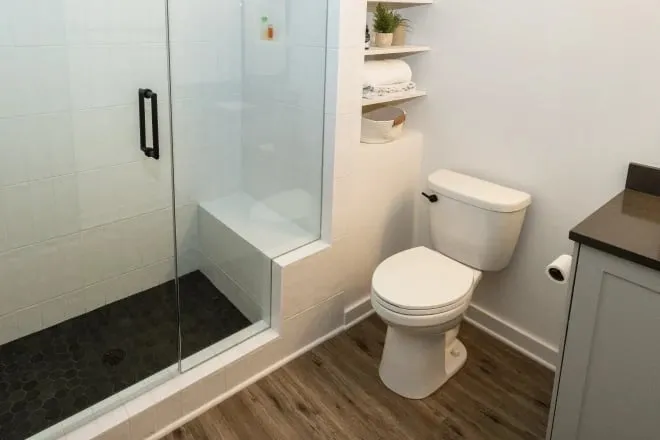
Standard height toilets have their own set of advantages and drawbacks.
Let’s take a look at them.
Pros of Standard Height Toilet
- Compact Design: Standard height toilets can fit in tight spots, making them ideal for small bathrooms.
- Lightweight: These toilets tend to weigh less than their taller counterparts.
- Kid-friendly: If you have children, a standard height toilet is essential in their bathroom; otherwise, they won’t be able to reach it without a step stool.
- Cost-effective: In many cases, standard height toilets are less expensive than comfort height toilets.
Cons of Standard Height Toilet
- Accessibility Issues: Standard toilets can be challenging for taller people, older adults, and those with mobility challenges.
- Additional Accessories Needed: You might need to buy a raised toilet seat or a toilet riser for those with mobility issues.
Pros & Cons of Comfort Height Toilets

Comfort height toilets also come with their own set of pros and cons.
Pros of Comfort Height Toilet
- ADA Compliant: Comfort height toilets meet the Americans With Disabilities Act (ADA) requirements, making them more accessible for people with disabilities.
- Ease of Use: These toilets are easier to sit on and stand up from, especially for taller individuals and the elderly.
- No Need for Additional Accessories: Because of the taller toilet height, you likely won’t need a toilet riser or an elevated toilet seat.
Cons of Comfort Height Toilet
- Not Ideal for Shorter Individuals and Children: The taller height can make it challenging for kids and adults who are shorter (under 5’4”).
- Space Requirements: Comfort height toilets may not fit in tight spaces due to their larger size. Per ADA requirements, you must have at least 16 to 18 inches of space from the center of a comfort height toilet to the surrounding wall.
Here’s a table that highlights the key differences between each type of toilet:
| Standard Height Toilet | Comfort Height Toilet | |
|---|---|---|
| Toilet Height | 14.5 to 16 inches (14 to 15 inches without the seat) | 17 to 19 inches (16 to 18 inches without the seat) |
| Other Names | Regular Height | ADA-Compliant, Universal Height, Chair Height |
| Pros | Compact design, lightweight, kid-friendly, cost-effective, may help prevent constipation | ADA Compliant, easier to sit and stand from, No need for additional accessories |
| Cons | Accessibility issues for taller people and those with mobility challenges. May need additional accessories, like a raised toilet seat. | Not ideal for shorter individuals and children, Larger size may not fit in tight spaces |
| Price | Generally the same, but can be a little less expensive | Generally the same, but can be a bit more expensive |
| Recommended For | Families with children, petite adults. Good for installation in guest bathrooms and common bathrooms. | Taller individuals, elderly, those with mobility issues. Good for installation in public places or bathrooms for aging at home. |
Please note that the prices can vary greatly depending on the specific model and brand of the toilet, as well as the region where you live.
It’s always a good idea to check with local suppliers or a trusted plumber for the most accurate pricing information.
Standard Height vs. Comfort Height Toilets: Factors to Consider

When choosing between a standard height and comfort height toilet, several factors come into play.
Appearance
Both standard height and comfort height toilets come in a variety of styles and colors.
Both types of toilets are available as one-piece toilets or two-piece toilets and can include options like dual flush, smart toilet features, or additional water efficiency.
Pressure-assisted toilets are available for both toilet heights, and both types of toilets are offered by top brands.
Most homeowners select neutral colors like white or beige, as these have more resale value if you ever decide to put your house on the market.
Options & Customizations
Comfort height toilets and regular height toilets come with similar characteristics and features.
The main distinction is the distance between the toilet bowl and the ground.
Both types can be found in one-piece or two-piece designs, and with different flushing mechanisms.
Both types of toilets are also available with bidet options, although the bidet cost will depend on what type of setup you have installed.
Price
Both comfort height and standard height toilets fall within a similar price range.
However, pricing can also depend on the brand and model you choose, as both are available in low-end to luxury models.
You can learn more about toilet costs in Georgia here.
Ease of Installation
Installation is the same for both toilet heights.
Unless you’re a licensed plumber, it’s best to hire a professional to ensure the toilet functions properly and isn’t wobbling, and that connections aren’t leaking.
Accessibility

Comfort height toilets meet the ADA guidelines for accessible toilets and provide the height needed for people who use wheelchairs.
The extra height makes it safer and easier for individuals with mobility issues.
Standard height toilets are not as accessible for individuals with mobility issues.
Best Use
The best toilet for your home depends on the height and physical needs of your family members.
It should be easy to sit on and stand up from, and your feet should rest comfortably on the floor.
If you have children or shorter adults in your home, a standard height toilet may be the better choice.
If you have taller individuals or those with mobility issues, a comfort height toilet may be more suitable.
The Impact on Health: Constipation Problems
People with constipation issues might find that a standard seat is the best option for evacuating the bowel completely.
This is because bowel movements are facilitated when the hips are slightly below the height of the knees in a squat position, according to some medical studies.
If a comfort height seat is used, a step stool might be needed to mimic that position.
Making the Right Choice for Your Bathroom

Choosing between a standard and comfort height toilet is a personal decision that should be based on the specific needs of your household.
Now you understand the real difference between standard toilet height and comfort height toilet options (also known as ADA toilet height), and how a few inches can impact comfort, accessibility, health, and long-term usability.
You’re equipped to choose the right height based on who uses the space, how it functions daily, and how it will serve your home for years to come.
Whether you’re leaning towards a standard height toilet or a comfort height model, we’re here to help make your bathroom remodeling project a success.
When you’re ready to remodel, Ranney Blair Weidmann Remodeling will guide you through layout planning, product selection, and professional installation to ensure every detail fits your lifestyle perfectly.
From thoughtful design to flawless execution, our design-build bathroom remodelers can handle your entire bathroom remodeling project with clarity and care.


